
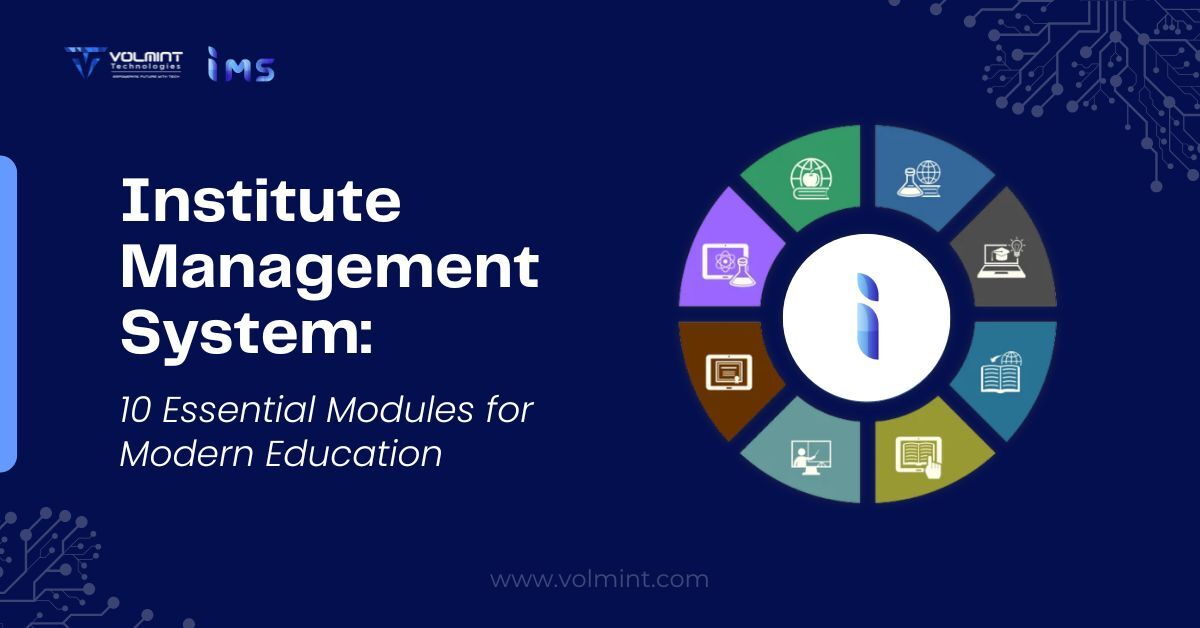
Institute Management Software is a web-based tool that can help with the administrative management chores and requirements of your institute. IMS organizes and unifies the Institute's operational procedures and information flows to synchronize its resources—students, staff, supplies, funds, and books—through a unified information system. With IMS's unique modules, Institutes can increase production, save administrative expenses, and give parents and students better services as a result.
1. Admission Management Module
Admission is the most important process for any educational or training institute. However, a manual process or system may delay the procedure, resulting in lower admission rates and a hampered overall student experience. While IMS brings the entire process online, allowing faculty to upload admission forms online and set up digital payment methods.
Students need to visit the site, fill in the online application form, attach documents, and pay the fees using online payment gateways. The administrative duties, such as form collection, document verification, updates regarding the admission process, and managing finances, are becoming much easier with the institute's ERP system.
Additionally, it creates an engaging environment between faculty and students, helps students stay notified about their admissions status and administration regarding counseling and form submission.
2. Course Management Module
Managing multiple courses or programs, their structure, and delivery methods can become hectic without a centralized system. Teachers and staff are often overwhelmed with workflow, which forces them to spend hours managing courses rather than concentrating on classes. The Course Management Module in IMS helps to simplify the entire course lifecycle, from creating a course/subject/program to its implementation. It enables faculty and administrators to design, update, and organize courses digitally, ensuring consistency and clarity across departments.
With this module, institutes can define course outlines, assign subjects, allocate faculties, and set credit structures in just a few clicks. It allows for timely updates in curriculum and maintains real-time records of each program offered. Students can easily access course details, subjects, faculty names, and learning resources through their dashboard. The module provides overall efficiency, ensuring both students and faculty remain aligned with academic goals.
3. Student Management Module
As the number of students grows, managing student data with 100% accuracy and security manually can be time-consuming and difficult. Moreover, it may increase the chances of errors, inefficiency, and inaccuracy that harm the student's holistic development and tracking, resulting in low performance. With IMS’s Student Management Module, the institute can streamline records and reports from admission to alumni safely with utmost accuracy.
From personal details, academic progress, attendance, performance reports, to disciplinary records—everything can be stored, accessed, and updated in real-time. The system enables faculty to monitor students' academic progress, generate performance reports, and provide a single platform for students to view their profiles, attendance, and notifications, reducing paper-based documentation and ensuring data security.
4. Exam Management Module
Examination is a crucial process to evaluate student progress, and it is a big task in itself. There is a long list of several pre- and post-examination tasks, such as selecting the test day, deciding on the exam location, assigning staff, deciding on the assessment method, scheduling the exam, and announcing and disseminating the results. Right from the scheduling to the result declaration, the Exam Management Module helps to simplify and automate the entire process.
The system allows institutes to plan exams, assign invigilators, generate hall tickets, and define seating arrangements in a few simple steps. Faculty can create exam sessions easily, schedule them, upload results, edit or update details when required, right from this single platform within a few clicks. Students can view their exam schedules, receive important alerts, and download hall tickets directly through their portal. Both students and faculty can experience a transparent, accurate, and efficient exam process with the institute management system.
5. Staff Management Module
For the smooth functioning of any institution, managing academic or non-academic staff is vital. Traditional methods to track employee details often lead to miscommunication, delayed updates, and administrative work overload. To overcome these kinds of challenges, an IMS offers a staff management module that helps to handle all staff-related operations efficiently.
This module enables institutes to maintain a centralized database of staff profiles, including qualifications, roles, work history, and more. It allows seamless tracking of attendance, leave requests, payroll processing, and shift scheduling. Admins can assign roles and responsibilities, monitor performance, payroll, and even generate reports for evaluations and promotions. Staff members also gain access to their dashboard, where they can view announcements, apply for leave, and access important documents.
6. Fee Management Module
Financial discrepancies are one of the biggest challenges for admins and accounts sections. A lack of a proper system leads them to poor fee tracking updates, errors, and mismanagement. The fee management module enables institutions to automate fee structures, define payment categories, and set due dates with reminders. Students or parents can securely pay fees online via integrated payment gateways, receive instant receipts, and access fee history at any time.
It also allows the finance department to monitor pending dues, generate reports, and reconcile transactions easily. Admins can configure scholarships, discounts, and late fee penalties with flexibility. Notifications about fee deadlines or pending payments ensure clear communication and timely action.7. Library Management Module
The library is a hub of books, students are not just utilizing this place for personalized learning but also borrowing books. Managing book issue records, updating them, tracking borrowings, and adding essential books required by the readers can be a struggle with manual processes. The Library Management Module in the Institute Management System automates and streamlines all library operations for improved efficiency.
From book issuance to return, fine calculation to stock management—everything is handled digitally. Students can check book availability, reserve titles, and track due dates online. Librarians can manage book records, categorize resources, and get real-time data on issued, returned, and overdue books. By offering easy access to digital catalogs and simplifying inventory control, this module transforms the traditional library into a modern, organized, and accessible learning space for all.
8. Administration Module
The administration department is the backbone of institutes, managing and overseeing all functionality involved in day-to-day operations. Whether it is about tracking or updating student data, employee details, creating sessions, or courses, there is endless work that cannot be handled with regular resources; it needs a comprehensive solution such as an institute management system.
The Administration Module handles internal communications, notifications, policy updates, and resource allocations—everything is seamlessly organized in one centralized platform. It empowers administrators to make informed decisions through real-time reports and analytics. It can assign admins, create sessions, and branches to enhance a smooth workflow. Additionally, through this integrated platform, they can assign roles and responsibilities for a secure and fruitful user experience.
9. Inventory Management Module
Running an institute requires a lot of resources, such as stationery items, lab equipment, library resources, furniture, digital assets, and much more. Managing inventories often leads to incorrect stock updates, errors, and is time-consuming. The Inventory Management Module helps to track and update data accurately to avoid any miscommunications or issues. The module ensures everything is accounted for in real time. It helps reduce waste, avoid stockouts, and prevent over-purchasing.
Admins can easily add or remove inventory items, assign assets to specific departments, set reorder levels, and generate detailed reports on usage and availability. The system also supports barcode integration, making asset tracking even more accurate and efficient.
10. Notification and Communication Module
Better communications and timely notifications are essential for smooth functioning. The miscommunication or poor coordination may harm the reputation of the institute, provide a bad student experience. The Notification and Communication Module ensures that every important update reaches students, faculty, and staff without delay or confusion.
Whether it’s an exam announcement, class reschedule, fee reminder, circular, or event update, this module allows the administration to send instant notifications through SMS, email, push alerts, or in-app messages. Communication can be personalized or sent in bulk, ensuring both one-on-one and group interactions are well-handled.
The institute ERP is not limited to these modules only. To know more about this smart and wonderful tool, click here to explore its benefits, advantages, unique features, etc.