logo
HomeBlogs

Online Exam Proctoring System - Secure & Flexible Proctored Exams

Online Exam Proctoring System - Secure & Flexible Proctored Exams

With the rise of online education, the way students take exams has changed dramatically. Universities, colleges, and certification bodies now rely on technology to ensure fair and secure assessments. This has led to the development of online exam proctoring software—a solution designed to maintain exam integrity in a virtual environment.

In traditional exams, physical invigilators monitor students to prevent cheating. However, with remote learning becoming more common, a virtual monitoring system is essential. Online proctoring software uses AI, live supervision, and automated security features to detect and prevent unfair practices during exams.

This technology allows students to take exams from anywhere while ensuring institutions uphold strict testing standards. It creates a level playing field, but it also raises concerns about privacy, technical issues, and security.

In this guide, we’ll break down online exam proctoring—how it works, its types, key features, benefits, challenges, and best practices. Whether you’re an educator seeking a reliable exam monitoring tool or a student preparing for an online proctored exam, this article will help you understand everything you need to know.

What is an Online Exam Proctoring System?

Online examination is the process of administering a test to determine a student's level of learning and subject-matter proficiency. This test can be used to determine a student's knowledge, skills, or capacity for learning, among other specific goals. The test can be administered online from any location with a reliable internet connection.

An Online Exam Proctoring Software is a technology-driven educational ERP system that monitors students during remote examinations. It ensures that test-takers follow the rules, preventing malpractice through AI-based facial recognition, browser lockdown, and real-time monitoring.

The online proctoring software is designed to support universities, colleges, corporate training programs, and certification exams, ensuring a seamless and fair examination process.

Types of Online Exam Proctoring System

Real-time Proctoring Online:

This kind of proctoring uses screen sharing and audio-video live streaming to observe test-takers in real time. The proctor is positioned at a distance and can keep an eye on 12 to 20 displays simultaneously in a grid perspective.

Recorded Proctoring:

There is only one difference between recorded proctoring and live proctoring, and that is that everything is recorded for a proctor to view later. Throughout the entire test, audiovisual recordings and screen sharing are continuously made, and after watching every recording fast-forward, the proctor renders an impartial judgment.

Advanced Automated Proctoring:

In contrast to the other two forms of proctoring, sophisticated automated proctoring relies on the system's artificial intelligence component to handle most tasks. In addition to audio-visual recordings and screen sharing, it uses analytics to make sure that any strange or deceptive action is captured.

How Does Online Proctoring Software Work?

The remote proctoring system is an essential tool for online examination. This AI-based advanced software safeguards the integrity of online examinations and helps to remove any unethical practices. Here is the step-by-step workflow of the online examination platform.

  • Online Registration : The first step is to register students for the online proctored exam by filling in the details such as name, address, class, academic year, and other relevant information to complete the registration process successfully.

  • Authentication Before Proceeding : Once the student data is updated successfully, the ID and password are generated, which is required to appear for the online test. Following the required authentication process, the student can proceed to the next step.

  • Examination : Depending on the type of online test – entrance/semester/yearly/UT, students would get instructions updated and prescribed by the university/college or other bodies in the beginning. They need to agree on the rules and proceed with the examination.

  • Monitoring : Throughout the process, students’ data and behavior will be visible to the exam invigilator and also recorded for further investigation with AI-Technology. Moreover, the invigilator also screens the student's behavior as soon as they start the online examination.

  • Disable Additional Browsers : To maintain honesty and to remove any scope of cheating during the examination, the online proctored exam software would disable all the additional browsers.

  • Video Monitoring and Image Capturing : Apart from the invigilator monitoring, the remote proctoring software will capture random images of the students and send them to the faculty. Moreover, recording and AI screen the student’s behavior and send them warnings if the student violates any terms or conditions.

The process and features depend on the test monitoring software you have chosen, but these are the main and basic steps of online proctoring software.

Also Read: How an Institute Management System Help Manage Your Institution's Workflow

Why Online Exam Proctoring System is Important?

Online education has drawn more attention than ever in recent years. Assessment of students is one of the most difficult parts of online learning since many forms of cheating in online tests might compromise academic integrity. As per a recent survey, more than 70% of students admitted practice dishonesty while online examination.

To avoid this kind of issue and to promote safe and reliable exam proctoring, a comprehensive system is required that not only monitors and conducts cheating-free online examinations but also handles other aspects to simplify the process.

The online examination platforms are designed with the help of advanced technology, including cloud computing, to overcome challenges raised during an online proctored exam. However, this advanced technology helps to give exams or invigilates from home, but also provides quality support to prevent cheating or malpractices. This means no injustice to any student during the examination or result.

Challenges During an Online Examinations without a Comprehensive Software

Online proctoring is very popular nowadays due to the flexibility and easy accessibility it provides. Many well-known educational institutes opt for online examinations, but the lack of a comprehensive system increases the chances of proctoring issues such as cheating, technical glitches, limited access and control, communication issues, and the potential for unauthorized access impact the fairness of the assessment. Some of the most common challenges faced during an online examination are:

  • Students may collaborate with others during an exam due to the absence of AI-based screening.

  • Invigilators may face issues while monitoring multiple students at a time.

  • The potential for identity theft in which someone else may take the exam on behalf of the student.

  • Technical glitches or internet interceptions may be causing data loss or platform malfunctions.

  • Delays in grading or result generation due to a large number of students or inaccuracy across different evaluators.

  • Inability to monitor all potential cheating methods or false screening.

  • Lack of proper communication delays the response.

Potential Solution: Argus, An Advanced Online Proctoring System

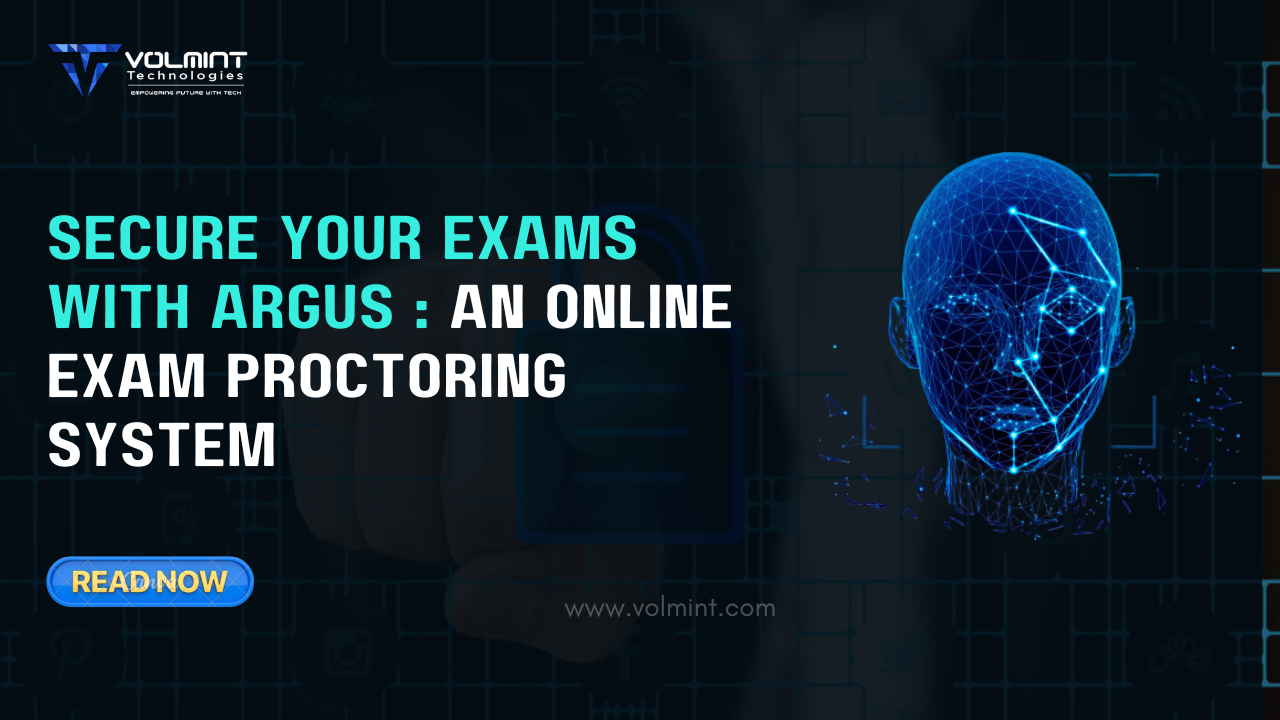
There are many loopholes that challenge the fairness of online proctoring. Switching to a reliable and advanced tool that redefines the process is important. Argus is an advanced online exam proctoring software developed by Volmint Technologies to safeguard the integrity of online examinations with AI-based technology.

With proctoring technology that effectively evaluates and identifies students' learning gaps through safe and scalable online exams, Argus, an online assessment tool, assists educational institutions in redefining the traditional assessment process while also improving students' academic performance and skill set.

Benefits of Choosing Argus For Your Online Assessments

An exam proctoring tool such as Argus improves the security and digital integrity of educational tests. It offers a full range of solutions for tracking, assessing, and safeguarding the online exam process by leveraging cutting-edge AI and machine learning technology.

Convenience : If you have a dependable internet connection, you can take an online proctored exam at any time and from any location. Students will find it much easier as a result. Particularly those who might reside distant from the testing location or have other obligations.

Security : Compared to pen-and-paper exams, online proctored examination systems are usually more secure. Features like keystroke analysis and facial recognition can be used by Argus proctoring software to confirm a student's identification and stop cheating. Compared to traditional testing, instances of cheating on online proctored exams are rare.

Cost-Effective : Remote proctoring eliminates the need to print exam papers or rent physical exam centers, it may be less expensive than pen-and-paper exams.

Flexibility : The format and question types of online proctored exams may be more adaptable. For instance, they can incorporate multimedia components such as audio recordings, pictures, and videos. These can aid in evaluating a greater variety of abilities and expertise.

Features for Advanced Control : Red flags are triggered if the candidate is suspected of cheating or engaging in other deceptive behavior. The proctor can quickly halt or terminate the test if an applicant consistently raises red flags. During the test, the device's copy-paste feature is also turned off.

Key Features of Argus: AI-Powered Online Proctoring

Argus isn’t just an online exam software; it’s a complete proctoring solution built to tackle the evolving challenges of online assessments. Here are the top features that make Argus stand out:

1. AI-Based Facial Recognition & Authentication

Before the exam begins, Argus verifies the candidate’s identity using AI-based facial recognition. This ensures that only authorized students take the exam, reducing the risk of impersonation. The system captures live images, cross-checks them with stored records, and flags discrepancies in real-time.

2. Automated & Live Proctoring

Institutions can choose between automated proctoring (where AI detects anomalies) or live proctoring (where human invigilators monitor students in real-time via webcams and microphones). The hybrid approach offers the flexibility of AI automation combined with human intervention when needed.

3. Browser Lockdown & Screen Monitoring

To prevent cheating, Argus restricts access to external websites, applications, and screen-sharing tools. It also tracks any unusual browser activity and flags suspicious behavior in real-time. The system ensures candidates cannot copy-paste answers, take screenshots, or use unauthorized software.

4. AI-Powered Behavior Analysis

Using advanced machine learning algorithms, Argus detects unusual movements, background noise, or multiple faces appearing in the frame—immediately alerting examiners. This helps in identifying potential exam misconduct such as whispering, looking away frequently, or attempting to communicate with others.

5. Secure Exam Paper Management

Argus ensures end-to-end encryption of exam papers and prevents unauthorized access, reducing the chances of paper leaks or unfair advantage. The exam content remains highly secure, with restricted access for only authenticated users.

6. Instant AI-Generated Reports & Red Flags

After the exam, Argus generates detailed reports, highlighting instances of possible malpractice with time-stamped evidence, allowing evaluators to review flagged activities efficiently. These reports offer insights into exam integrity and student performance, ensuring a fair evaluation process.

7. Multi-Device Compatibility

Whether students use desktops, laptops, or tablets, Argus ensures seamless proctoring across all devices without requiring complex installations. The system supports multiple operating systems, making it highly accessible to a diverse range of users.

8. Scalable & Cloud-Based Architecture

As a cloud-powered solution, Argus can support thousands of candidates simultaneously, ensuring reliability for institutions of any size. With cloud integration, institutions do not have to worry about storage or infrastructure limitations.


Who Can Benefit from Remote Proctoring Software?

Since virtual classrooms have become an integral part of the education system, online assessment software is needed to conduct unit tests and term exams in multiple-choice questions and descriptive format.

We provide the best solution while considering the fundamental issues of bandwidth, device, and security in the form of Argus. It is built-in with artificial intelligence and business intelligence (BI) powered analytics tools for analyzing test levels, areas for improvement, etc., helping institutions like schools, colleges, and universities overcome the following obstacles.

With Argus, Institutions Can:

  • Conduct exams remotely with zero compromise on security.

  • Monitor candidates using AI-powered facial recognition and behavior tracking.

  • Ensure real-time fraud detection with automated red flags for suspicious activities.

  • Generate detailed exam integrity reports for analysis and evaluation.

  • Reduce administrative workload by automating exam invigilation and reporting.

  • Enhance accessibility by allowing exams from any location while maintaining fairness.

Why Argus Stands Out?

Application Management:

Easily handle application submissions, reviews, and approvals through a user-friendly portal. Track progress in real time, automate workflows and ensure a hassle-free experience for applicants.

Communication Hub:

Keep all conversations with prospective students in one place. Whether through email, SMS, or social media, send personalized messages, track interactions, and maintain consistent follow-ups to enhance engagement.

Analytics & Reporting:

Get valuable insights with detailed reports and analytics. Monitor key metrics like application trends, conversion rates, and enrollment stats to make informed decisions and improve processes.

Secure, Role-Based Access:

Effectively manage and organize leads from multiple sources while preventing duplication and data loss. Ensure smooth distribution and tracking for better conversions.

Comprehensive report:

Both the test administrator and the test taker receive a comprehensive report from the remote proctoring tool after the test. The report offers a thorough evaluation of the candidate's exam performance. It indicates how many times the flags were raised, as well as any other odd activity that occurred throughout the test. Additionally, it displays the test scores and percentages.

24/7 Support:

Our dedicated support team is always available to assist you, providing quick resolutions and ensuring a smooth user experience at every step.

Conclusion

Online exam proctoring software is revolutionizing the way assessments are conducted in the digital age. With its ability to enhance exam security, reduce logistical challenges, and provide real-time monitoring, it has become a crucial tool for educational institutions and businesses. While challenges exist, advancements in AI, privacy protection, and authentication methods will continue to improve the proctoring experience for both educators and students.

More Blogs

Let's Connect for Technological Brilliance

Reach Out to Volmint Technologies Today and Unleash the Power of Customized Solutions Tailored to Elevate Your Business.

Contact Us
Footer Background Circle